New Tignanello vs Vintage Tignanello: What’s Actually Different?
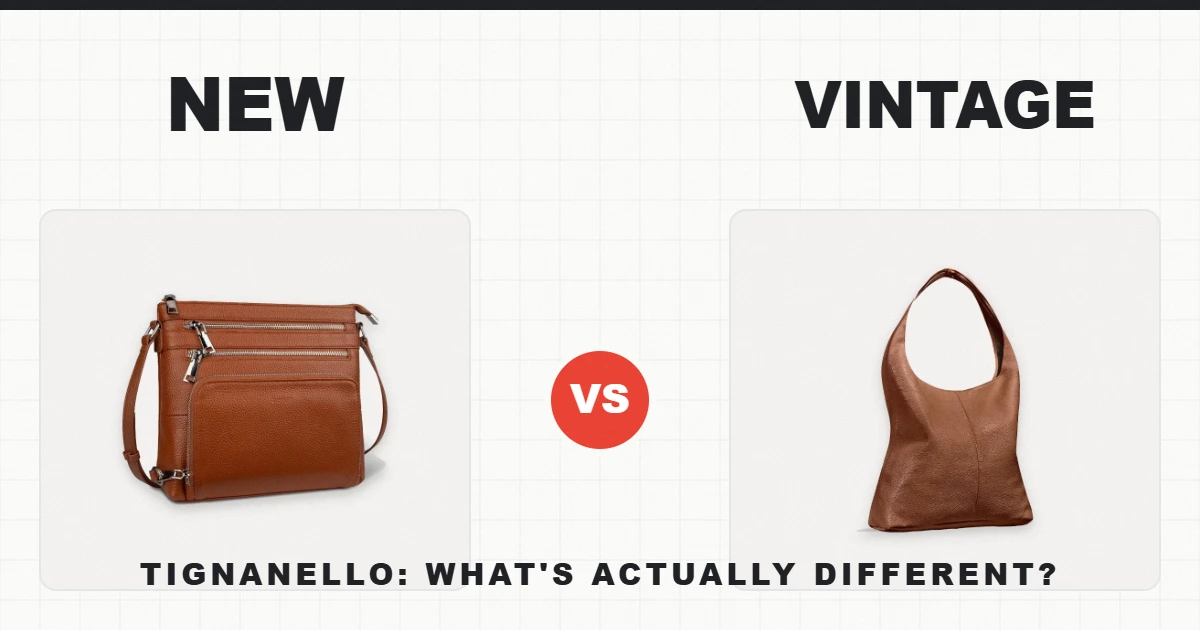
Search “Tignanello purse” today and you get two very different kinds of results: brand-new pebbled-leather bags built in Tignanello’s original style, and actual secondhand Tignanello pieces from years back being resold on Poshmark, eBay, and thredUP. They get compared constantly, but they are not the same product, and the differences show up in the leather, the hardware, the price, and the condition risk you’re taking on. Here’s how the two actually stack up.
What “New Tignanello” and “Vintage Tignanello” Each Mean
Tignanello is not producing new leather handbags at the volume it once did, so a “new” purse in this comparison usually means a current bag built in the same pebbled-leather, boho-classic silhouette rather than a bag carrying the Tignanello label off a factory line this year. A “vintage” purse means an original Tignanello bag from an earlier production run, bought secondhand, on a resale marketplace, or passed down. Both routes get you a similar look. They get you there very differently.
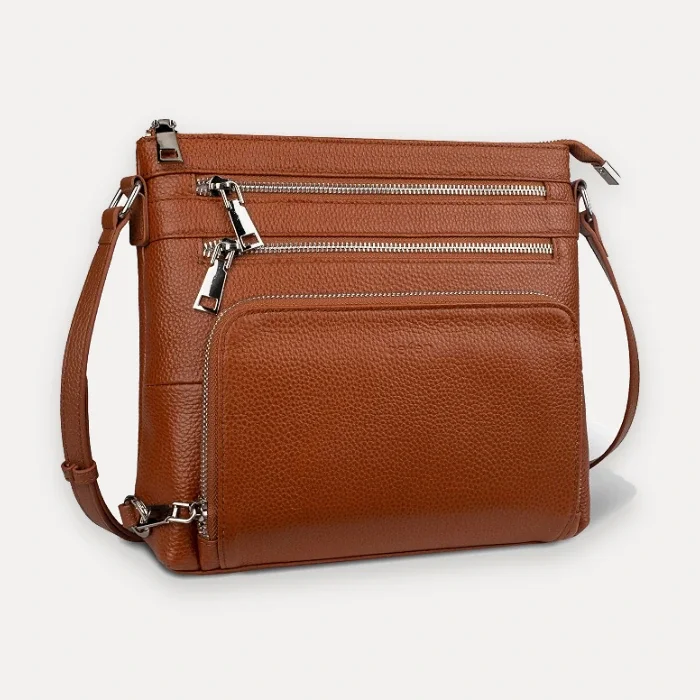
New Tignanello-Style Bag
A current pebbled-leather crossbody or hobo built to the same silhouette, sold new with fresh hardware and no wear history.
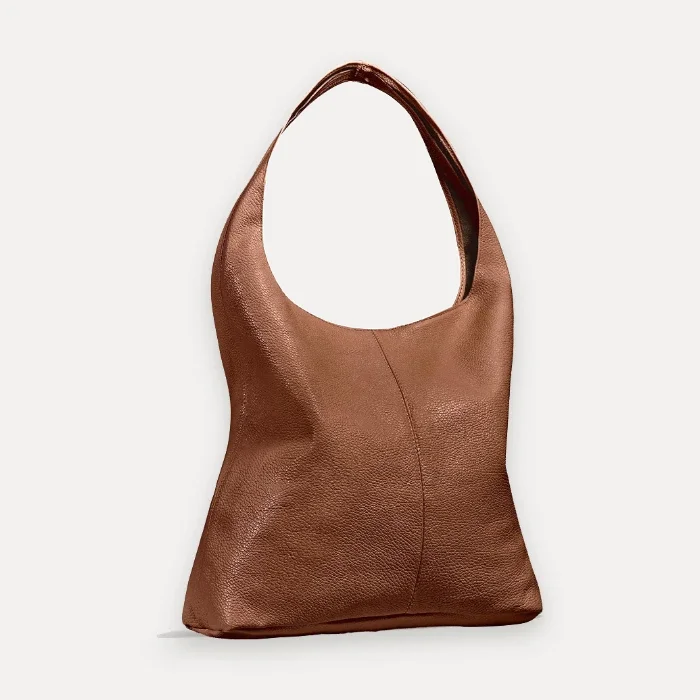
Vintage Tignanello Bag
An original Tignanello purse from an earlier collection, resold secondhand with whatever wear, patina, or repairs it has picked up.
Leather and Craftsmanship Side by Side
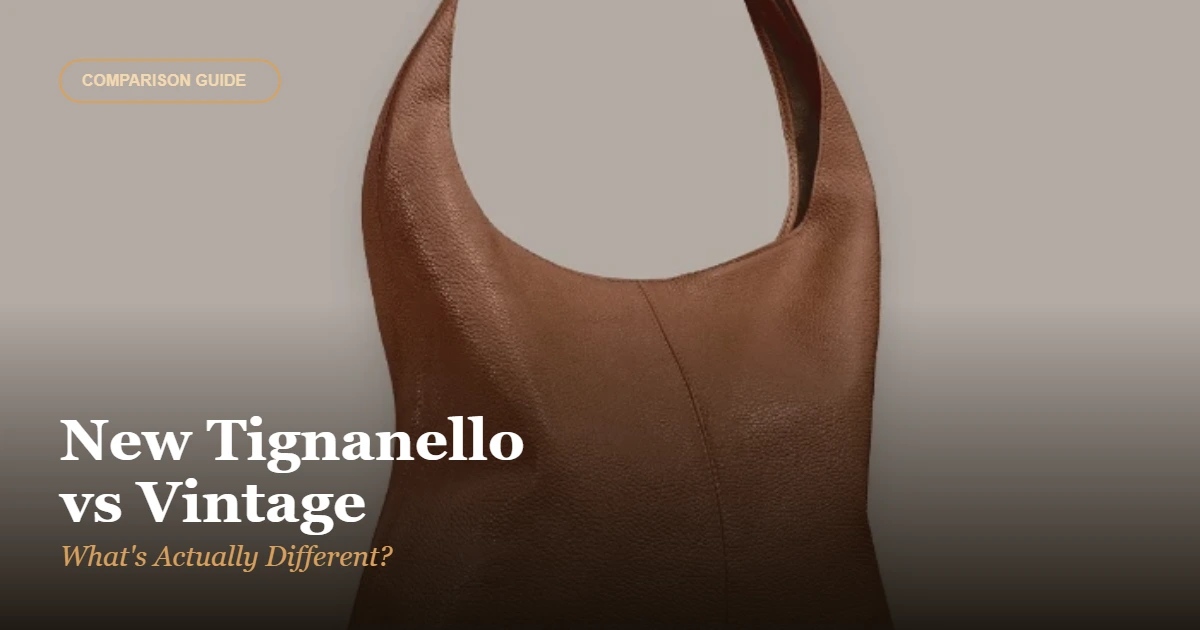
A new pebbled-leather bag arrives stiff. The grain is even, the dye is uniform, and it takes a few weeks of actual use before the leather starts to soften and move the way older bags do. A genuine vintage Tignanello has already gone through that break-in period, so the leather is usually softer and more supple straight away, with the pebbled texture worn smoother in the spots that got the most handling — the corners, the strap drop, the area under the flap.
The tradeoff is consistency. A new bag looks the same as its product photo. A vintage one is a single, specific object, and its leather condition depends entirely on how the previous owner stored and used it. Cracking, dry patches, and color transfer from denim are all common on older leather goods that sat in a closet without conditioning.
Hardware, Tags, and Sizing Differences
Hardware finish is one of the fastest ways to tell the two apart. Older Tignanello bags tend to carry warmer, brass-toned hardware that’s dulled or slightly tarnished with age. Current leather bags in this style usually use a brighter gold or matte gunmetal finish that hasn’t had time to oxidize. Zipper pulls, snap closures, and the interior fabric lining are worth checking too — a musty smell or a torn lining seam is a sign of age and storage conditions, not necessarily poor quality.
Sizing and pocket layout can shift slightly between production runs, so a vintage bag from one year might carry pockets in a different spot than a newer bag with a similar name. If interior organization matters to you — a dedicated phone pocket, a zip compartment, a key clip — check the actual listing photos rather than assuming every “organizer” bag is laid out the same way.
Price and Value: What You’re Actually Paying For
New Tignanello-style bags sit in a fairly predictable, moderate price range, since they’re current retail stock with no scarcity built in. Vintage Tignanello pricing swings much wider. A common style in worn condition can sell for less than a new equivalent. A rare cut, an unusual color, or a piece in excellent, barely-used condition can sell for more, especially once shipping and a resale platform’s fees are added on top.
The honest way to think about it: with a new bag, you’re paying for predictability and a fresh start. With a vintage bag, you’re paying for a specific, sometimes harder-to-replace look, and you’re accepting the condition as-is unless the seller has a real return policy.
How to Check a Vintage Tignanello Before You Buy It
- Ask for close-up photos of the interior lining, the corners, and the strap attachment points, not just the front of the bag.
- Check the care tag and stamped logo against other verified listings of the same style — inconsistent fonts or stitching are the usual red flags.
- Ask directly about odor, staining, and any repairs the seller has made.
- Factor return policy into the price. A non-returnable vintage bag is a bigger risk than one you can send back.
Which One Should You Buy
If you want a specific Tignanello piece for its history, its exact cut, or because you already own and love an older one, a vetted vintage listing is worth the extra homework. If you mainly want the pebbled-leather, boho-classic look with predictable condition and no guesswork, a current bag built in that same style is the simpler buy. Our Shop page has both budget-friendly and designer picks in that style, and our piece on what actually happened to the Tignanello brand covers why new Tignanello-branded bags are so hard to find in the first place.
As an Amazon Associate, we earn from qualifying purchases.
Common Questions
Is a vintage Tignanello purse worth more than a new leather bag in the same style?
Not automatically. Common, well-worn vintage styles often sell for less than a new equivalent, while rare cuts or excellent-condition pieces can sell for more once resale fees and shipping are added.
How can you tell if a Tignanello purse is really vintage?
Look at the hardware tone, the care tag and stamped logo, and the leather’s wear pattern. Warm, dulled brass-toned hardware and softened, broken-in leather point to an older bag, while bright, uniform hardware points to a current one.
Is it safe to buy a vintage Tignanello purse online?
It can be, if you check the seller’s return policy, ask for close-up photos of the interior and hardware, and confirm any wear or repairs before paying. Buying from a marketplace with buyer protection lowers the risk considerably.