Is Tignanello Real Leather? Leather Types, Quality & Care Guide
Written by Isfandyar Bukhari, Content Strategist
If you’re comparing a Tignanello leather purse to the brand’s coated-canvas or vegan lines, the leather versions are the ones worth slowing down for. Tignanello leather handbags and Tignanello leather pocketbooks use real cowhide finished in a few different ways, and the finish affects everything from how the bag ages to how you should clean it. This guide walks through genuine leather basics, the finishes Tignanello actually uses, how to judge quality before you buy, and how to keep a leather bag looking good for years.
What “Genuine Leather” Means on a Tignanello Bag
Tignanello labels most of its leather handbags as genuine leather, meaning the exterior is real cowhide rather than a polyurethane or vinyl coating made to look like it. That’s distinct from “full-grain” or “top-grain,” terms that describe how much of the hide’s natural surface is left intact. Tignanello doesn’t typically market at that level of detail, so the practical way to check is to look at the material tag inside the bag and handle the surface yourself: real hide has a slightly uneven grain and a warmer feel than coated fabric, while a printed vegan-leather bag has a more uniform, plasticky texture.
For a deeper primer on how leather is tanned and graded, the Wikipedia overview of leather is a useful reference.
Leather Types and Finishes to Know
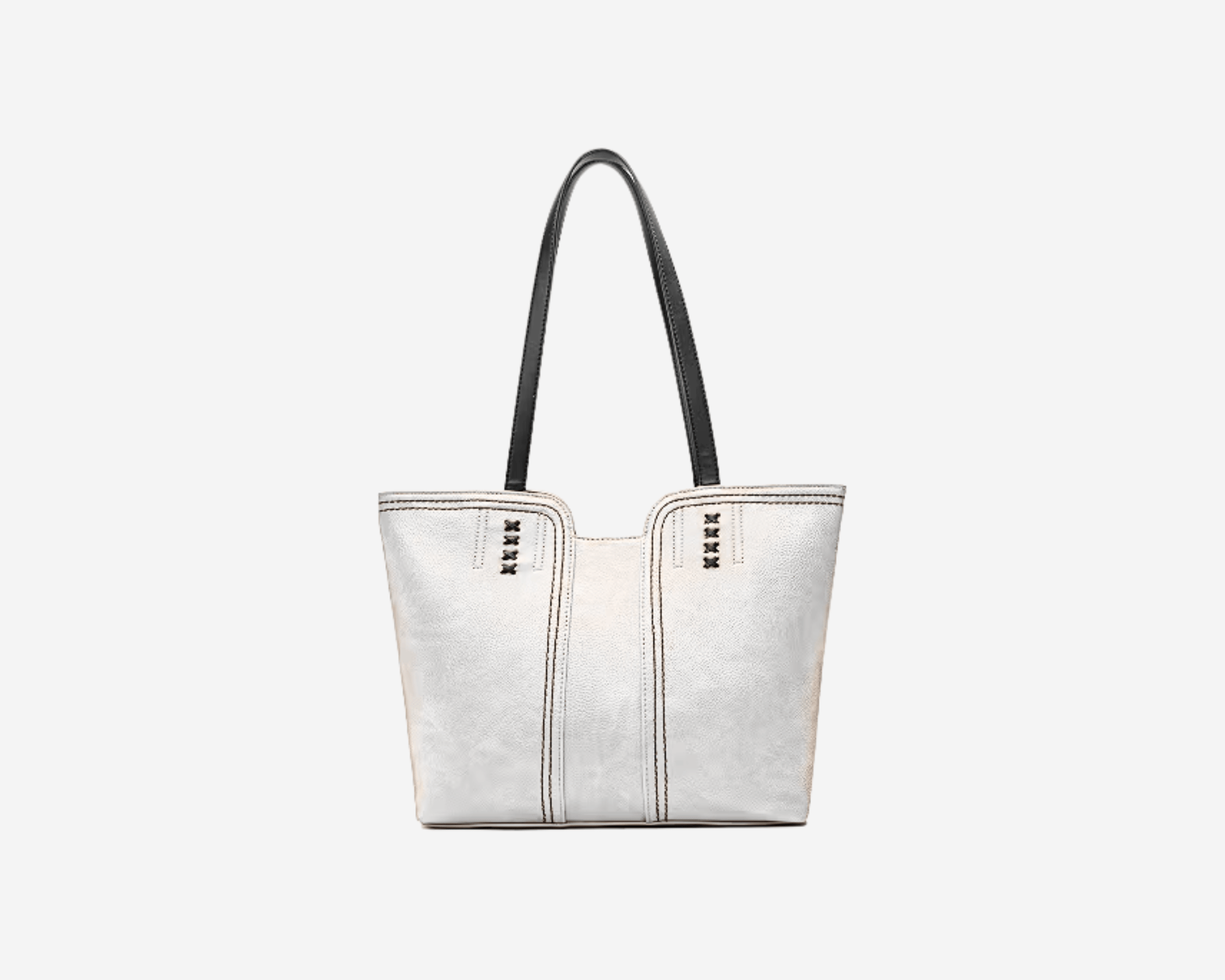
Pebbled leather is the finish you’ll see most often across Tignanello’s lineup. It’s embossed with a small, bumpy texture that hides fine scratches and minor scuffs, which makes it a practical choice for a bag you’re carrying daily. Smooth leather shows up on dressier styles and has a cleaner, flatter surface, but it also shows scuffs and watermarks more readily, so it needs a bit more care. A few styles mix the two, using smooth leather trim or piping against a pebbled body. Neither finish is “better” outright; pebbled leather favors low-maintenance daily use, while smooth leather leans dressier.
How to Judge Leather Quality Before You Buy
A handful of details tell you more about build quality than the price tag does. Stitching should run in straight, even rows with no loose threads or skipped stitches, especially along stress points like handle attachments and corners. Hardware, the zipper pulls, buckles, and feet, should feel solid rather than lightweight, and should be evenly plated with no visible discoloration out of the box. Lining matters too: Tignanello typically uses a signature printed fabric lining rather than leather, and it should be sewn in flat with pockets that sit square, not puckered. Give the leather itself a gentle stretch near a seam; it should hold its shape rather than feeling thin or stiff like a coated substitute.
Caring for Tignanello Leather
Leather care doesn’t need to be complicated. Wipe pebbled or smooth leather with a soft, dry cloth after regular use to keep dust and oils from building up in the grain. Keep the bag away from direct heat and prolonged sun, which dry out and discolor leather over time. A leather conditioner made for finished cowhide, applied sparingly every few months, keeps the surface supple and helps prevent cracking at fold points like the base and handle attachments. Store the bag stuffed with tissue or a pillow to hold its shape, ideally in a breathable dust bag rather than plastic, which can trap moisture.
Buying Pre-Owned: Checking Leather Condition
Secondhand Tignanello leather pocketbooks can be excellent value if you know what to check. Look closely at the base and bottom corners, the areas that take the most wear, for cracking, flaking, or color loss. On pebbled leather, check that the embossed texture is still crisp rather than worn smooth, which can signal heavy use. Smell the interior for mustiness, and check the lining for stains or tears that don’t show up in listing photos. Minor surface scuffs on pebbled leather are usually not a dealbreaker and can often be conditioned out, but stiff, cracking leather or separating seams are harder to fix and worth factoring into the price.
Looking at a specific style?
See how leather quality plays out on our crossbody, tote, satchel, and wallet guides, or browse the full Tignanello handbags lineup.
Leather Quality vs. Overall Brand Quality
This guide focuses specifically on the leather itself. If you want the bigger picture on pricing, durability, and how Tignanello stacks up against brands like Coach, our Is Tignanello a Good Brand? guide covers that in more depth, and our brand history guide covers where Tignanello is sold today.
Is Tignanello leather real leather?
Most Tignanello leather handbags and pocketbooks use genuine cowhide for the exterior, finished as either pebbled or smooth leather. Vegan and coated-canvas styles exist in the same lineup, so check the product tag or listing description if you specifically want a leather bag.
What’s the difference between pebbled and smooth Tignanello leather?
Pebbled leather has an embossed, textured surface that hides small scratches and is easier to maintain day to day. Smooth leather has a flatter, cleaner surface that looks dressier but shows scuffs and water spots more easily.
How do you clean a Tignanello leather purse?
Wipe it down regularly with a soft, dry cloth, keep it out of direct sun and heat, and apply a leather conditioner made for finished cowhide every few months. Avoid saturating the leather with water or household cleaners.
Does Tignanello leather crack over time?
Any leather can crack if it dries out from heat, sun, or lack of conditioning. Routine conditioning and proper storage, stuffed and in a breathable dust bag, help pebbled and smooth Tignanello leather stay flexible for years.
Is it safe to buy a pre-owned Tignanello leather bag?
Yes, as long as you inspect it first. Check the base and corners for cracking, confirm the embossed pebbled texture still looks crisp, and check the lining for stains or odors before buying.
Shop Tignanello Purses by Color
Looking for a specific shade? These guides round up current leather bags that match Tignanello’s most popular colorways: